New Species in Puerto Rico: Sphecodes and Ceratina

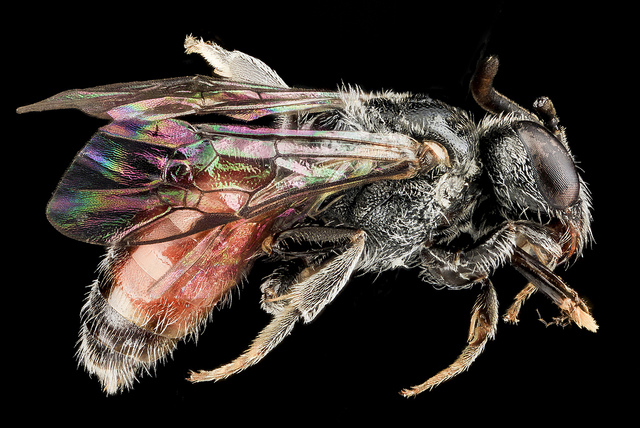
Sphecodes species from Santa Isabel, Puerto Rico. Picture taken by Sam Droege, USGS BIML

Sphecodes species from Santa Isabel, Puerto Rico. Picture taken by Sam Droege, USGS BIML

Sphecodes species from Santa Isabel, Puerto Rico. Picture taken by Sam Droege, USGS BIML

Sphecodes species from Santa Isabel, Puerto Rico. Picture taken by Sam Droege, USGS BIML

Sphecodes species from Santa Isabel, Puerto Rico. Picture taken by Sam Droege, USGS BIML

Sphecodes species from Santa Isabel, Puerto Rico. Picture taken by Sam Droege, USGS BIML

Sphecodes species from Santa Isabel, Puerto Rico. Picture taken by Sam Droege, USGS BIML

Sphecodes species from Santa Isabel, Puerto Rico. Picture taken by Sam Droege, USGS BIML

I have yet to identify the species, but I believe this genus is new to island. It may have come in from neighboring islands, or it may be a new species altogether.

Fingers crossed that it’s new!

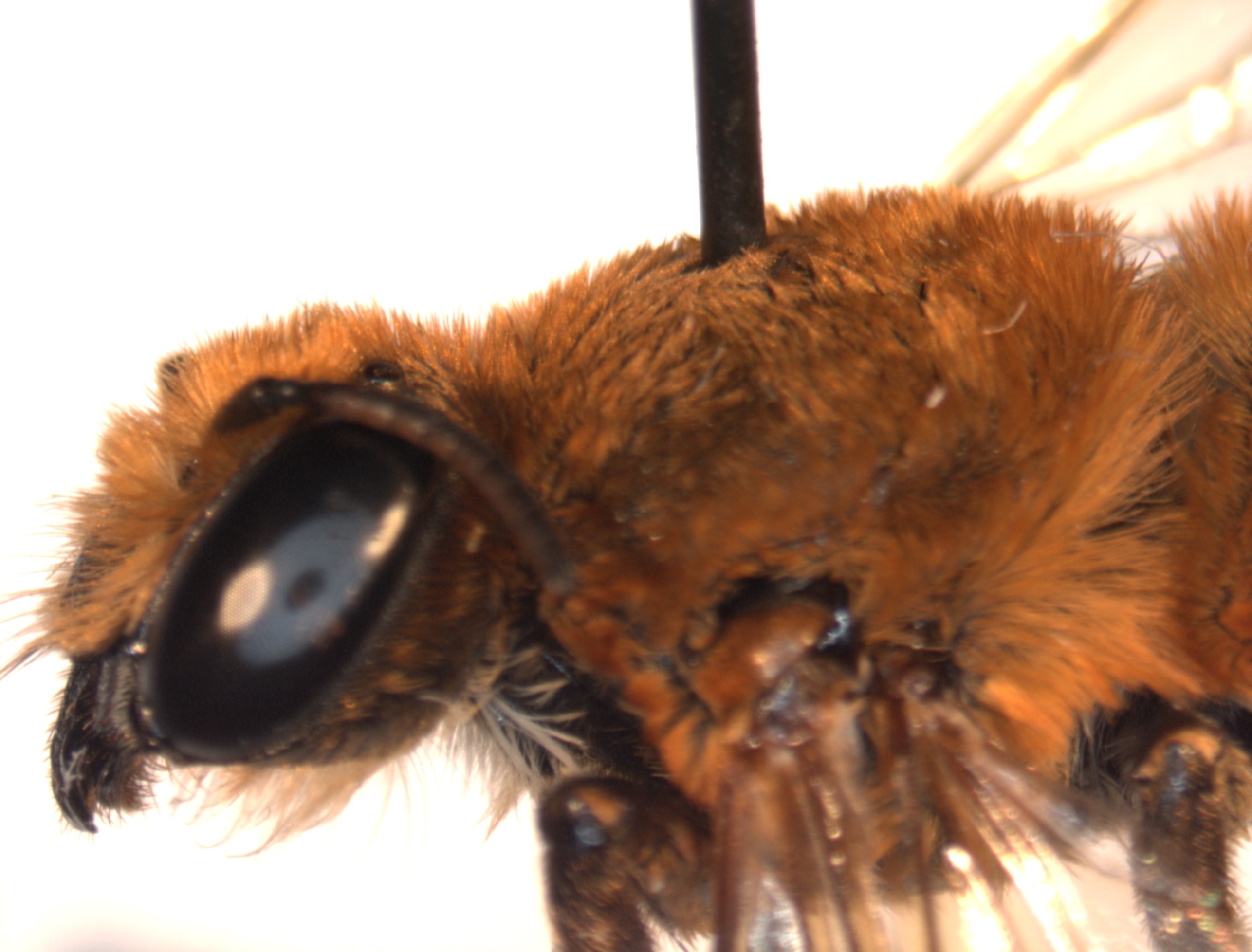
While at the Bee course this August, I found out that a bee I thought was Lasioglossum was actually another Sphecodes. I didn’t recognize it since it was all black…but after a bit of reading, I found out that male Sphecodes look quite different from females.

Male Sphecodes

Male Sphecodes side

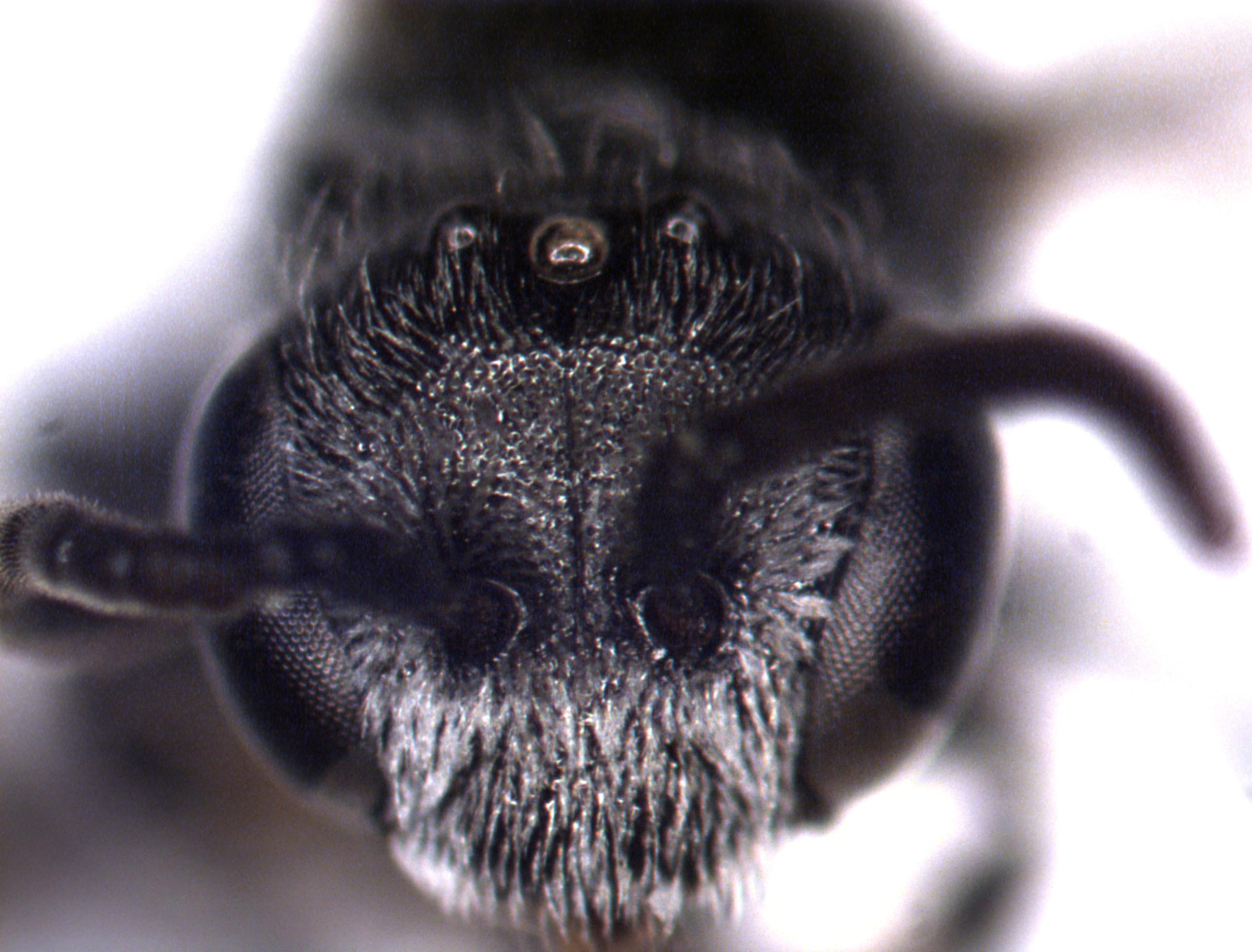
Male Sphecodes face

Male Sphecodes face


Here’s another new genus for the island!

Female Ceratina species collected in a pepper field using bee bowls. Picture take by Andrew Ernst NCSU

Female Ceratina guarnacciana species collected in a pepper field using bee bowls. Picture take by Andrew Ernst NCSU

Female Ceratina species collected in a pepper field using bee bowls. Picture take by Andrew Ernst NCSU

Female Ceratina guarnacciana species collected in a pepper field using bee bowls. Picture take by Andrew Ernst NCSU

It’s the first record of a bee of Ceratina in Puerto Rico. A Caribbean bee expert , Julio Genaro, said: ” it is a great result from the biogeographical point of view”.

Posted in Bee pictures, New species | Leave a comment

Super fancy Puerto Rican bee pictures

C. haemorrhoidalis female

Here’s an example! Centris haemorrhoidalis female, side view. Taken by Sam Droege USGS BIML

Super fancy Puerto Rican bee pictures

Sam Droege from USGS Bee inventory and  Monitoring Lab has taken some gorgeous pictures of my beautiful bees.

I’ve added the pictures to my “Carribean Bee ID” section, but if you want to look at them all in one shot, here’s the link.

Enjoy!

Posted in Bee pictures | Tagged , , , | Leave a comment

The adventures of Puerto Rican bee hunters

Wowza! What a day! Everything bad that could happen, happened.

My friend and colleague, Loreli and I were out surveying one farm with one crop (pumpkin) and two river sites today and I now have a story to tell!

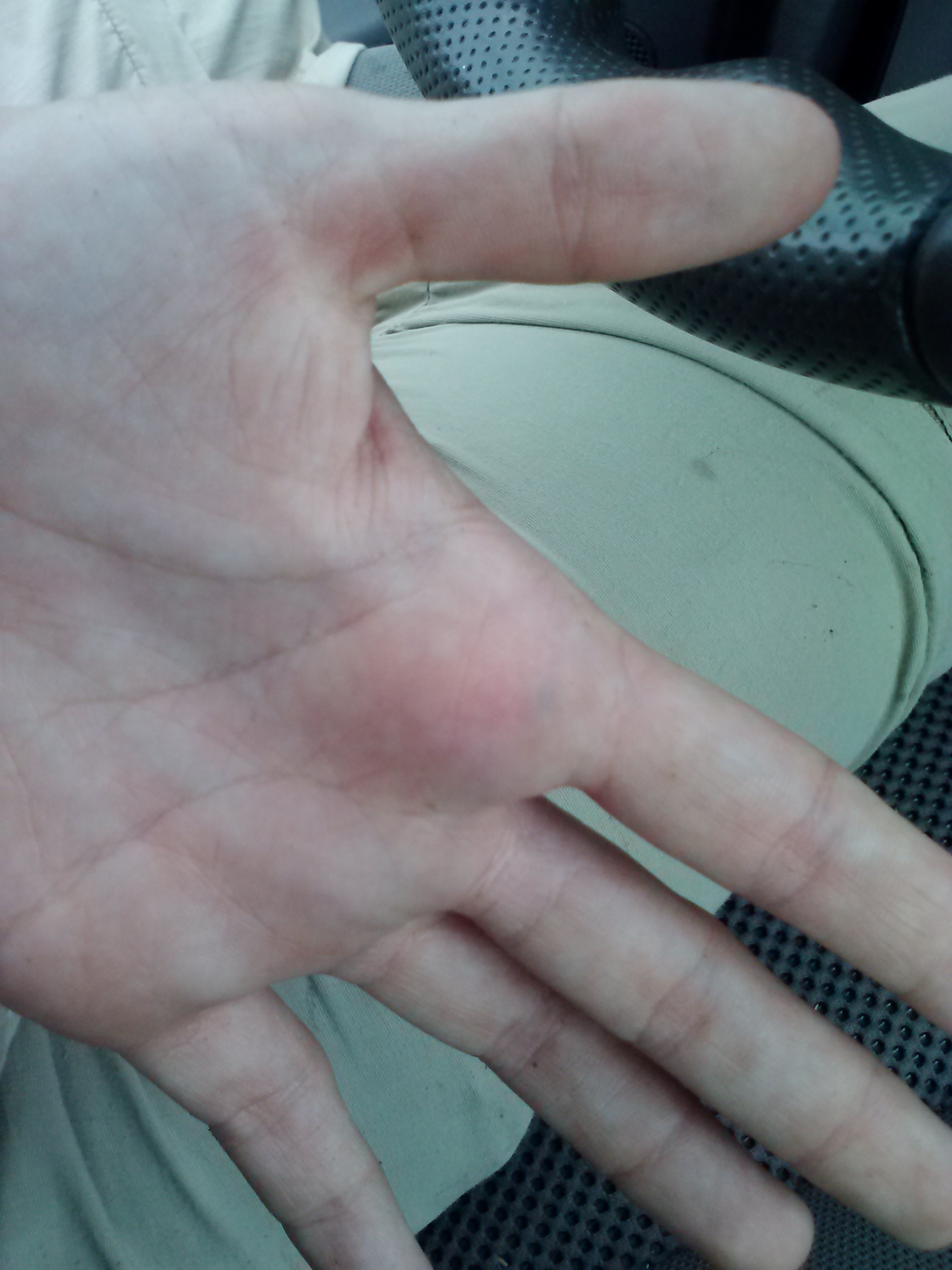
All started out well this morning – we stopped at a river site, surveyed, caught a bunch a big and beautiful bees. Great! Then we went to the second river site, put down our bee bowls. All still good. Made it to the farm site, put the bowls and started sweep netting, and then the fun began. We usually sweep for 30 minutes, but, about 25 minutes into the sweep survey, I got a call from Loreli. I was kind of confused since I had just seen her walking down, and usually we focus on bees, and not phone calls while surveying. Nonetheless, I answered and she told me she had just gotten stung by a bee (now think it was a wasp) and was on her way to the office. This was her first time getting stung by a bee, wasp or anything, so we both had no idea how she’d react. So I quickly made my way to the office. When I got there, she was OK, but her hand was quite swollen where she was stung.

Loreli's hand a the end of the day

Loreli’s hand a the end of the day

Apparently, while trying to put a bee in her kill jar, she squeezed either a bee or a little wasp. She didn’t see the insect, so we’re not sure. Anyways, after that we left the farm and went on with our morning.

In the afternoon, we surveyed our first river site, no problem. But as we made our way to the second river site, we started seeing some big rain clouds moving in.

Rain in the horizon

Rain in the horizon

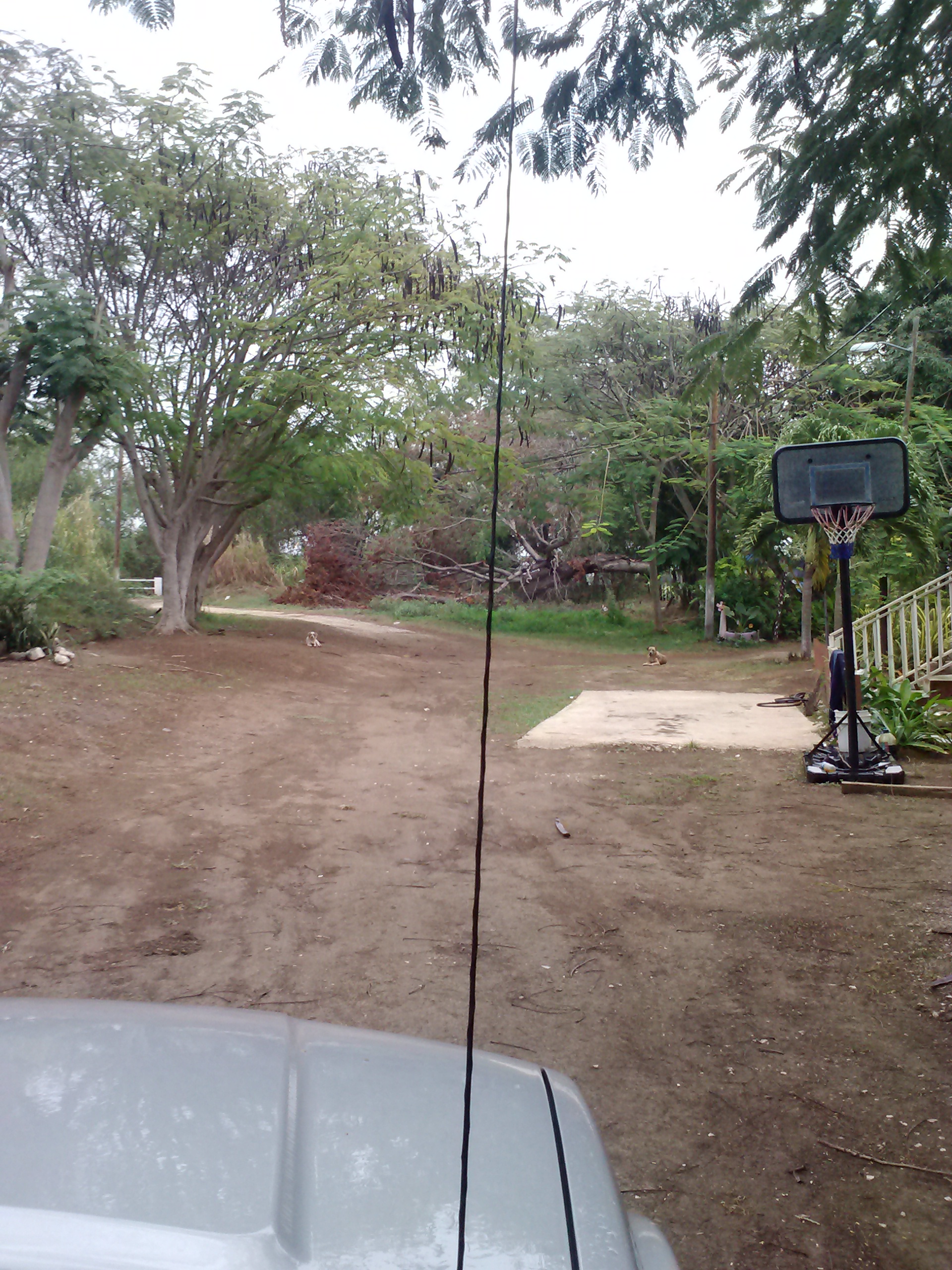
We made it to our second river site, and started sweeping, and the drops started falling after 20 minutes. So we decided to stop sweeping and pick up our bee bowls. As Loreli turned the truck around, I picked up the bowls. But after bowl number three, two dogs, which appeared to come out of no where, started barking and chasing me. I just started screaming and running toward the truck, and jumped into the front seat faster than I could realize what was happening.

Those two dogs were ‘domesticated’, but apparently the owner leaves his dogs outside (in a fence free yard) while he’s out. So the dogs are free to bark and chase whoever they want! Anyways, with adrenaline pumping through my veins, we decided to go and pick up the bowls with the truck placed between me and the dogs. So, we drove up to about 2-3 meters from each bowl so that I could easily run out and jump back into the truck. Before getting out of the car, though, I grabbed Loreli’s spray sunscreen in one hand, ready to spray the dogs in their face if need be. More than once the dogs came chasing after me, but either Loreli moved the truck to scare them, or I managed to jump into the truck in time.

Crazy dogs waiting for me

Crazy dogs waiting for me

We managed to get all but two of the bowls, which were right in front of the dogs’ house.

So we went to the farm, collected the bowls there, got muddy

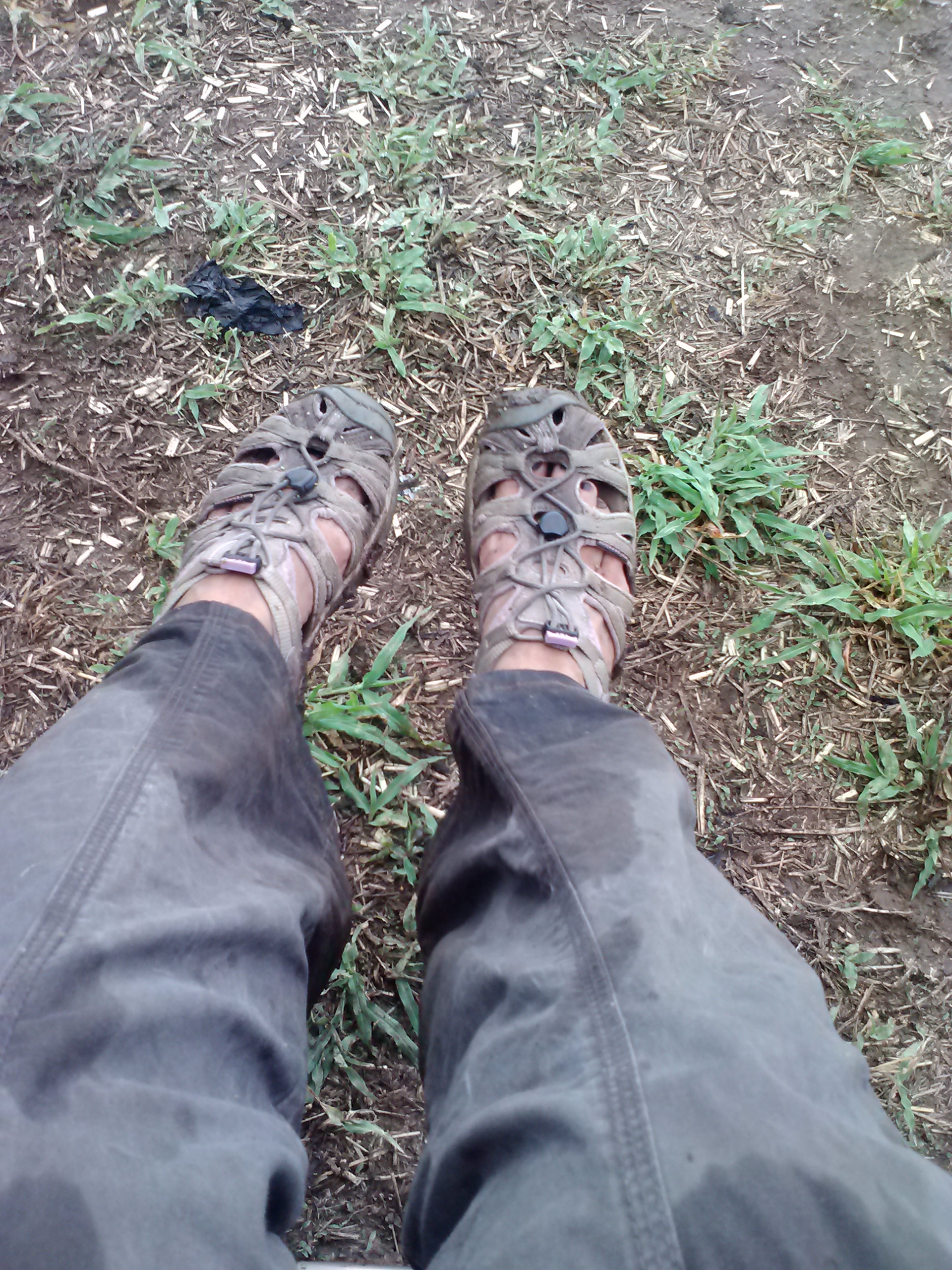
Muddy, wet feet

Muddy, wet feet

and decided to go back for another try. Oh, and I forgot to tell you that on our way to the farm, Loreli told me that two undercover police officers had stopped to talk to her while we were sweeping the second river site. Apparently they were looking for some drug dealer who lived near where we were walking!

Anyways, on our way back to the river site, after surveying the farm, I picked up a stick to defend myself in case the dogs got too close. When we got there, we didn’t see the dogs, so I was able to get the bowl from right in front of their house. But they quickly realized we were back, and I had to sprint back into the truck. To get the last bowl, we basically backed the truck up all the way to the bowl, so I was able to get in and out without the dogs seeing me.

In the end, we made it out alive! Today sure was action packed! I sure am glad I love my job 🙂

Posted in New Life Experiences | Tagged , , , , | Leave a comment

Bee’s on fire!

During my last farm survey in St-Croix, the trees and shrubs in the peripheries of the farm were on fire. I don’t know what caused the fire…maybe some hooligans intentionally started it, maybe the land owners did, or maybe it was just caused by drought. Whatever the cause may be, the fire caused something quite interesting to happen: I think the bees were escaping the fire, and flying into my bee bowls (yellow, blue and white bowls filled with soapy water). The reason I say this is because I found about 6-7 Megachile lanata (leafcutter bees) in my bee bowls. **By the way, this species is another new record for the island** 6-7 collected in one day is quite a lot, compared to the single M. lanata I’ve collected in PR since the beginning of my study. I don’t know if the bees were flying out of the fire, and spotting my bee bowls and landing in them thinking they were a flower (the basic way the bee bowls work), or if they were flying into the bowls in search of water because they were dehydrated, or even maybe to extinguish themselves.

So, I know that all sounds very strange, but here’s why I think the bees may have been on fire:

Singed

Singed

Not singed
Not singed

Isn’t that funny? I might be completely wrong, but it seems plausible…right?

Posted in Bee sightings | Tagged , | Leave a comment

Flying high

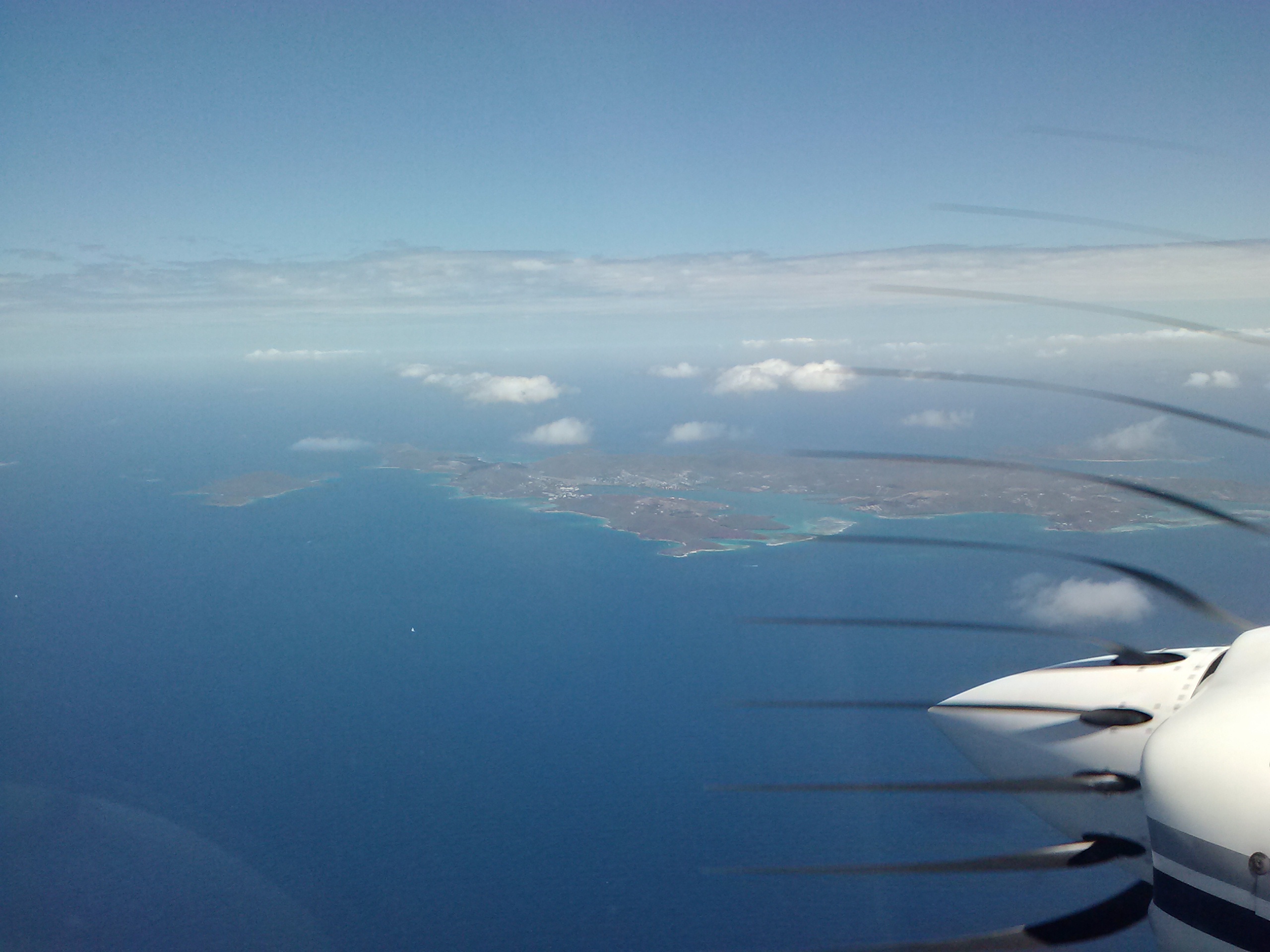
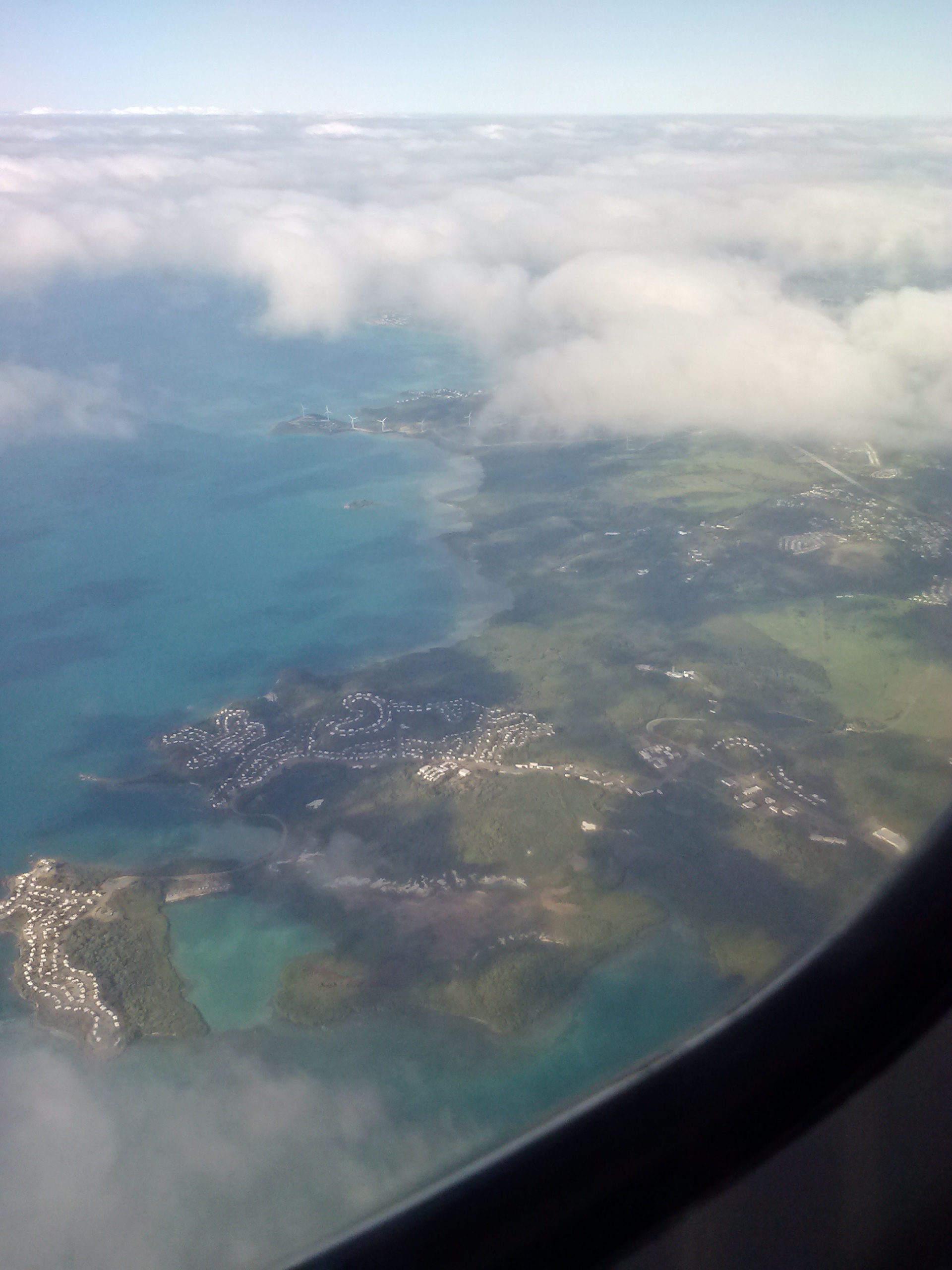
View of Culebra

View of Culebra

This trip to St-Croix was pretty incredible. Concerning my research project, we found a good number of new bees (some new records, and some maybe entirely new species), and this was just by surveying the center and SE of the island. There’s a whole area of ‘rainforest’ that we will not be surveying for this project, but that I’m sure contain a lot of treasures. So, finding new bees was really exciting, but something else really made me happy, during this trip. Yesterday morning, a lady from the University of VI accompanied us while we were out surveying bees at a farm. She followed us around as we were sweeping bees up with our nets, and took pictures. She said she was going to write an article about my project in the University’s extension newsletter. Then, as though that didn’t make me feel special enough I got to speak to the US Virgin Island agriculture commissioner on the phone! He called from St-John, and asked me to tell him about my project. After I explained it to him, he thanked me for including the USVI, and wished me luck. It made me really happy that we included USVI in our study, and that we’re putting an equal amount of effort in surveying St-Croix, as we are Puerto Rico.

Concerning my personal experience as a tourist, I still think that the flight to St-Croix on the little Cape Air planes was the highlight of my trip. This time, I got to sit next to the pilot on both flights, there and back. It’s impossible for me to describe how beautiful the view is, flying 3000 ft above sea level in this tiny plane. I have to admit, there are many pros to flying on those small planes, but there is one con: you feel every little air movement under the plane. On our way back to SJU, we went around El Yunque, and since the winds are strong off the mountain, the plane was rising and falling with the movement. I sure was glad I didn’t have a big breakfast!

I video taped a bit of the flight for you. This was recorded as we were about to land. We came from the East, and passed the airport and made a really sharp turn to head into the landing from the West.

Click on “Landing in San Juan” to see the video. Enjoy!

Posted in Exploring new places, New Life Experiences | Tagged , , | Leave a comment

Three new bees in St-Croix

Good afternoon everyone, as my island friends would say.

I have good news to report from St-Croix! Just from surveying two farms, yesterday, we found two new bees, previously unrecorded to the island. One, the large, extremely conspicuous Xylocopa mordax (you may recall me saying this in one of my first posts). This beautiful bee is also found in Puerto Rico. It’s the one I tried to record and take pictures of..well success today!

Xylocopa mordax foraging in St-Croix field

Xylocopa mordax foraging in St-Croix field

I  really don’t know how anyone could miss seeing this bee…It’s even in the bee collection at the university which dates back to the 1980s. Anyways, X. mordax is on the island, and actually likes to forage in the same plant we spotted it on, in Puerto Rico.

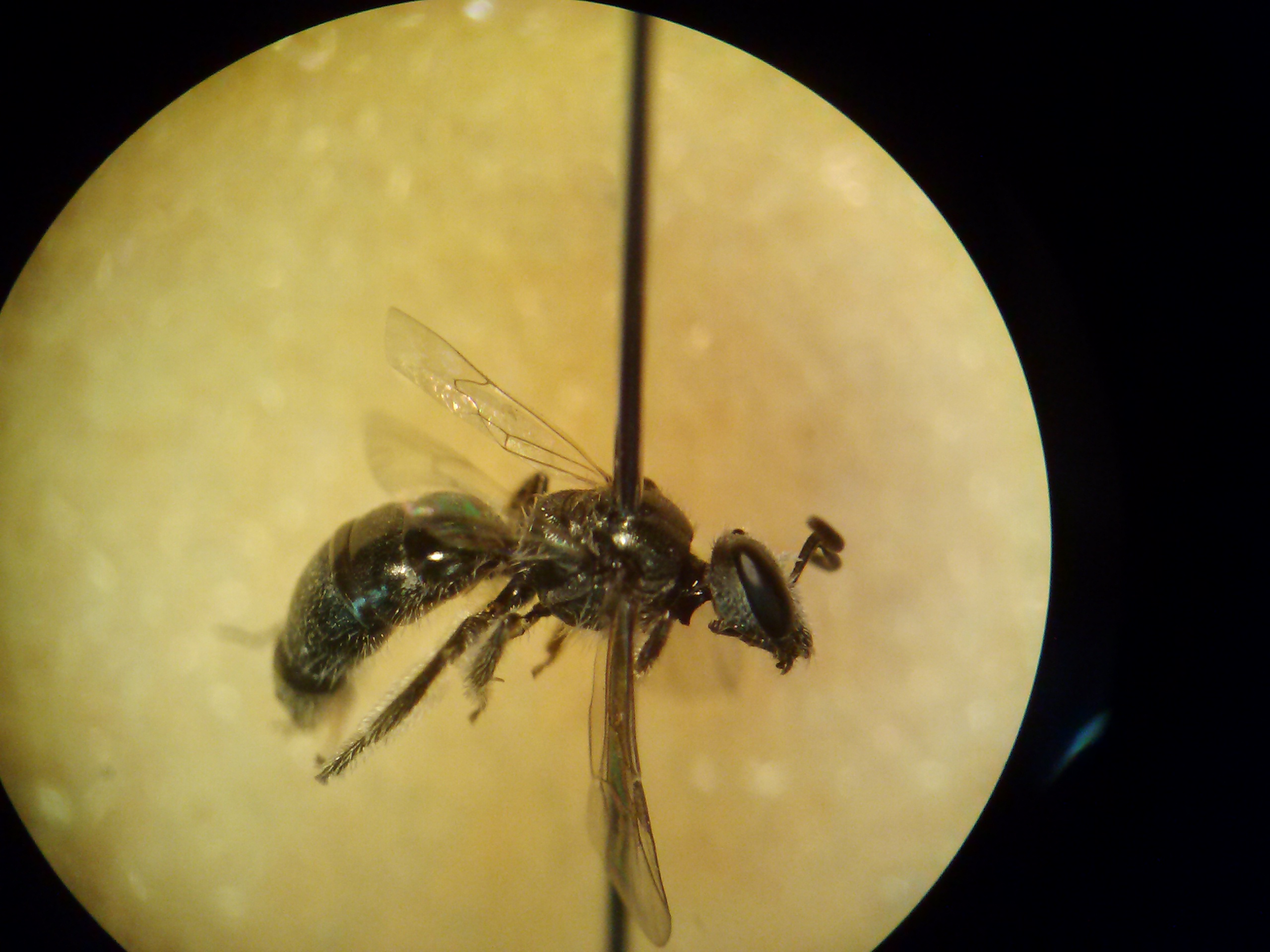
Along with the extremely conspicuous X. mordax, we collected a very inconspicuous Lasioglossum bee. I don’t know what it is yet, or even if it’s native to the island. But this it what the beauty looks like. Not, the photo was taken through a microscopose lense.

New Lasiosglossum bee in St-Croix

New Lasiosglossum bee in St-Croix

I’m not sure how many other bees have yet to be found on the island, but if I was able to find two in a day, and just in the central part of the island, I’m sure there are at least a few more! There’s a ‘rainforest’ here…might be interesting to see what’s there…maybe during my next trip. Still one and a half more days to go! Wish me luck!

***There are actually THREE new bees*** A third one was collected in an agricultural field that had had a fire in the surrounding trees.

Megachile lanata is has now also been found on the island.

Not singed

Posted in Bee sightings | Tagged | Leave a comment

Can you see what I see?

There’s nothing more frustrating than seeing something amazing, being able to record it (video and picture) and then having technology fail you. You know how I know that? Because that’s what happened to me today. I was surveying two river sites, and this morning, there was an amazing abundance of big, beautiful Xylocopa mordax bees, and Centris decolorata. The X. mordax were foraging on Macroptilium lathyroides (commonly known as cow pea, wild bushbean, phasy bean). The bees were at arms length distance from me, so I know the pictures were good. But then, when I went to look at them this aftenoon, they were gone.

Macroptilium lathyroides

Macroptilium lathyroides

Oh well! Next time!

Anyways, on a lighter note, Puerto Rico is gorgeous. I’d like to share a few pictures I managed to take today.
Enojoy :

Osprey eagle

Osprey eagle


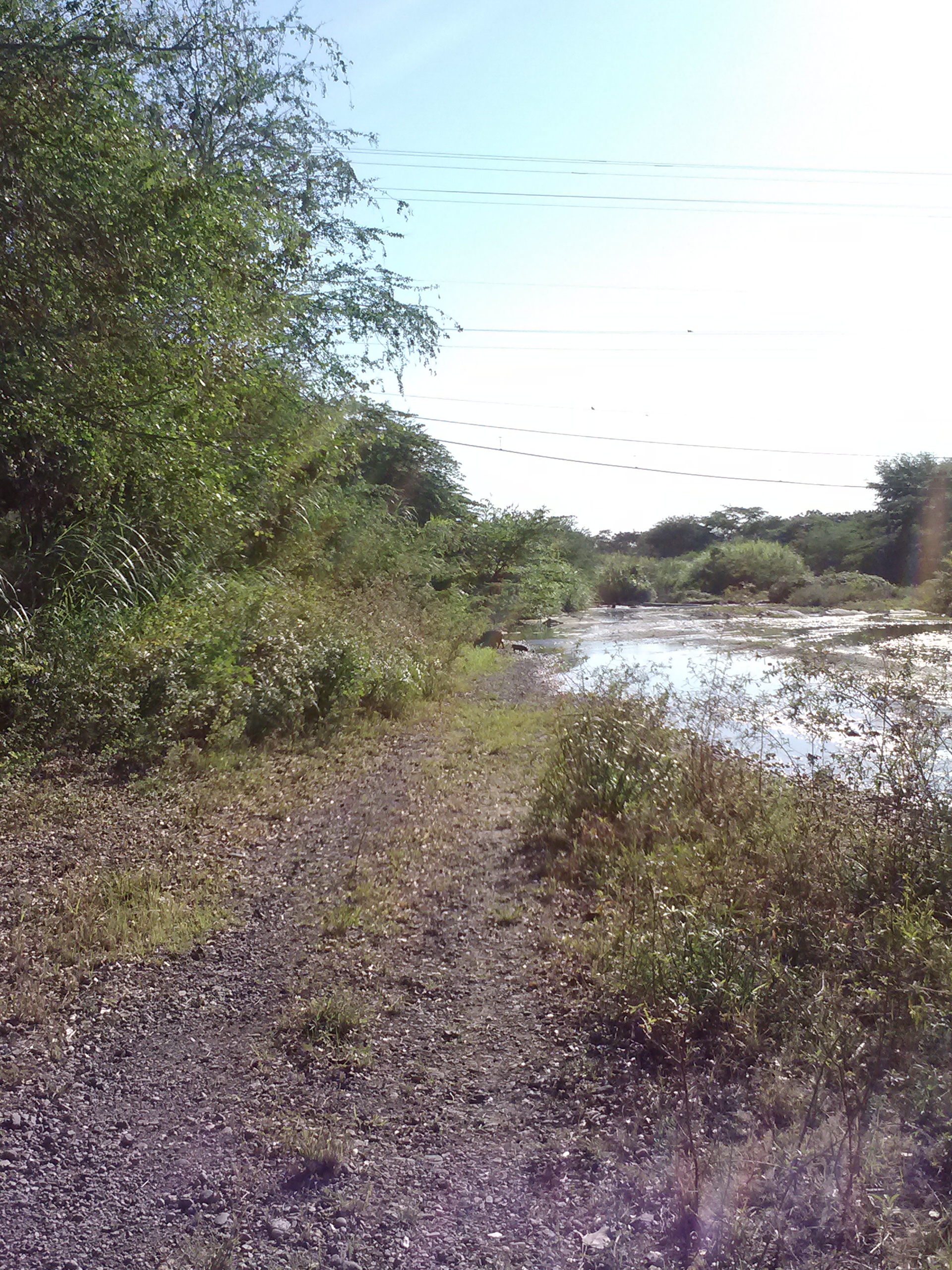
Pigs on the river bank

Pigs on the river bank


Sunset behind the field house

Sunset behind the field house

I really shouldn’t complain. This week has been great. We’ve collected two species I hadn’t collected before, the weather has been perfect, and my techs are wonderful.

Posted in Bee sightings | Tagged | Leave a comment

Honeybees aren’t good enough

Overall, wild insects pollinated crops more effectively, because increase in their visitation enhanced fruit set by twice as much as an equivalent increase in honey bee visitation. Further, visitation by wild insects and honey bees promoted fruit set independently, so high abundance of managed honey bees supplemented, rather than substituted for, pollination by wild insects. Our results suggest that new practices for integrated management of both honey bees and diverse wild-insect assemblages will enhance global crop yields.

Extracted from the abstract of  Wild Pollinators Enhance Fruit Set of Crops Regardless of Honey Bee Abundance (http://www.sciencemag.org/content/early/2013/02/27/science.1230200.full.pdf)

This short article, written by over 30 scientists, definitely summarizes everything that I’ve been reading about bees as pollinators for agricultural crops. Some of the main points are:

1- Wild-insect and honey bee visitation enhances pollen deposition on stigmas of flowers (i.e. pollination)

2- Fruit production post-pollination by wild bees is much more likely than fruit production post honeybee visitation. (i.e. wild insects are better pollinators than honeybees)

3- Pollination services of honeybees supplement pollination services of wild insects, but cannot replace it.

4- Increasing wild bee species richness results in higher flower visitation.

5- Agricultural intensification reduces wild insect species richness & flower visitation

So, the take home message is: Increase research efforts to attract and maintain wild pollinators in agricultural areas, since pollination services by honeybees are not as reliable and efficient as those of wild pollinators.

You should read it!

Posted in Interesting publications | Tagged , , | Leave a comment

Exploring St-Croix

Since I was only in St-Croix for 2 days, I didn’t get to see much…but I did have time to walk around the small, but beautiful campus. 

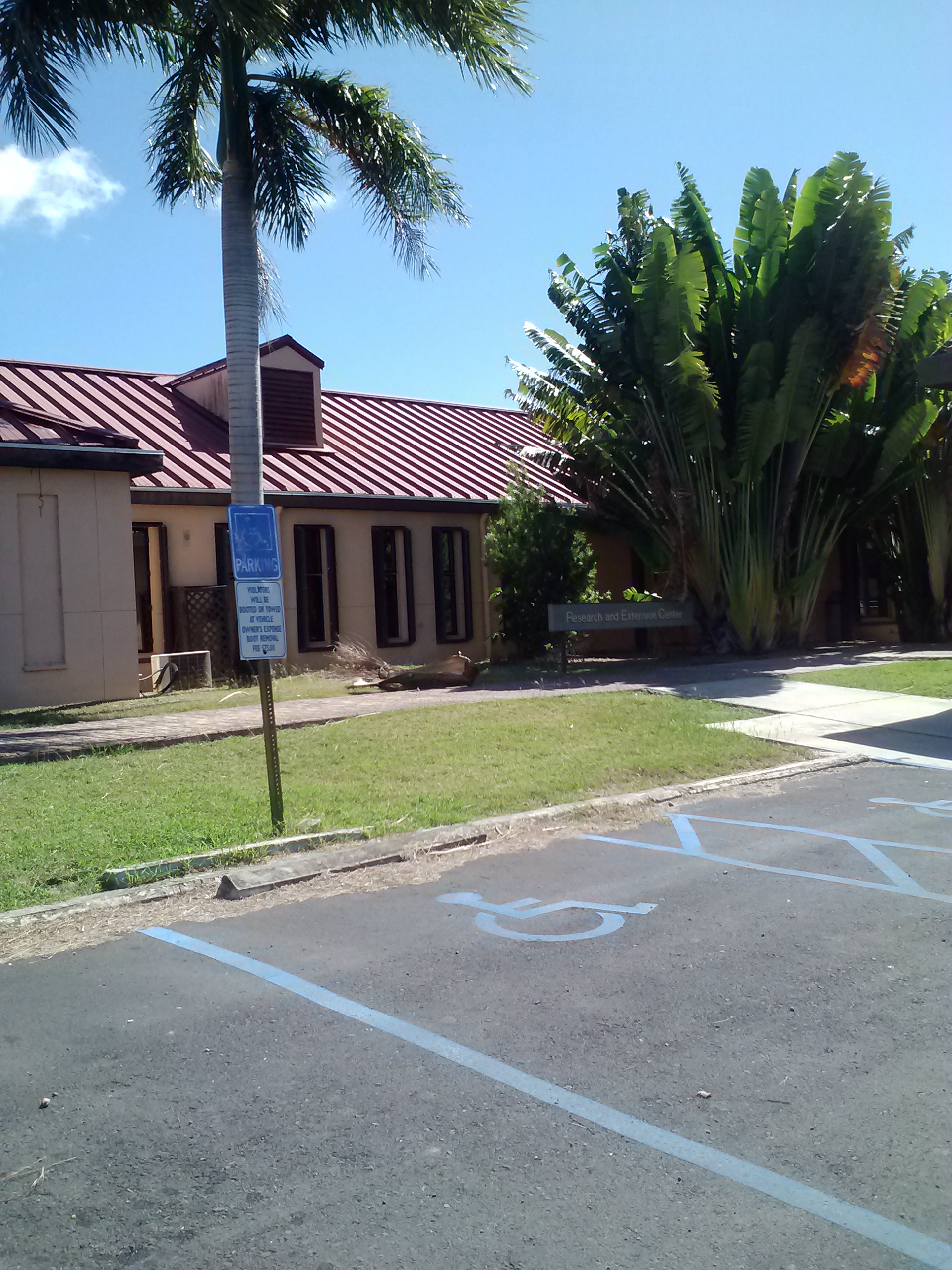
ImageThis is a picture of the Research and Extension Center’s building. Inside, there were pictures of the old sugar cane plantations that use to exist around the island. It’s pretty impressive to see the change.

ImageI believe this was the administrative building. Beautiful architecture. It was alone at the top of a little hill. 

ImageImageImageThese three pictures are of the inside of the main building. It was very open, very ‘Caribbean’ feeling. I don’t exactly know what the stone structure use to be, or if it was even there before the school was built. And, yes, there’s a little stream built into the stone structure.

When we drove off campus to go and visit the agricultural fields, we passed by this impressive baobab tree. 

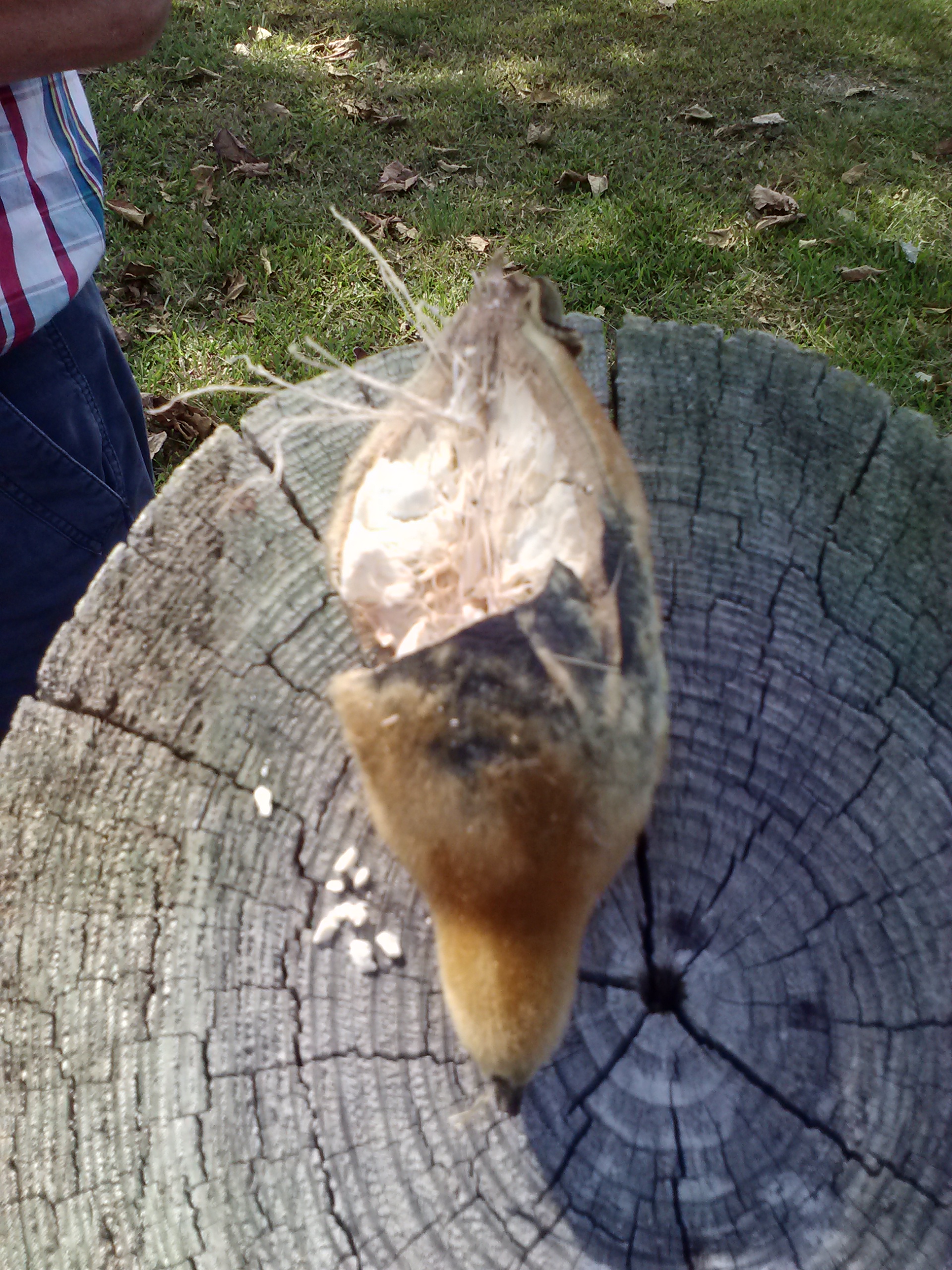
ImageEven though it looks like three separate trees growing side-by-side, it’s actually one. Rudy, the botanist we were with, knew it was one tree because of the shape of the fruit. Instead of having round fruits like all the other trees on the island, the fruits from this tree have a ‘nipple’ in them.

Image


If you crack open the fruit, there’s pulp and seeds you can eat. Kind of like the cocoa fruit. 

ImageIt’s kind of hard to see from this picture, but all that white is pulp. You suck on the seeds to get the tangy, but slightly sweet pulp off of them.

I quite enjoyed it, actually!


Posted in Exploring new places, New Life Experiences | Tagged , | Leave a comment

Island hopping in the Caribbean

After surveying the bees in Puerto Rico, I flew to St-Croix to find agricultural fields to survey. Although the trip was just a couple of days long, it was quite an experience!

Image

Cape air plane from San Juan to St-Croix

First, flying from SJU to STX was probably the most exhilarating experience of my life. We flew on this super tiny 8-passenger plane, and I was seated right behind the pilot. Being in such a small plane meant that we only got up to an altitude of about 3500 feet. Even though I was a little nervous at first, the 40 minute plane ride was absolutely fantastic. We flew right by the beautiful islands of Vieques, Culebra and St-Thomas. The landing was a little bit trickier, and I did feel my heart drop a couple of times, but the pilot was very professional and got us down in one piece.

Apparently St-Croix only has about 100,000 people, and compared to Puerto Rico, the island was empty! The airport was located in the center of the island, so we rented a Jeep and went to Christiansted, which is all the way at the East of the island. Was pretty empty there too, except for a few tourists who really stuck out like sore thumbs. We did drove around the island a little, had lunch in Frederiksted and then went back to the hotel. Then the next day, Monday, we had our appointment with an NRCS representative and an Entomology Extension worker from the USVI university. They took us around to visit farms.

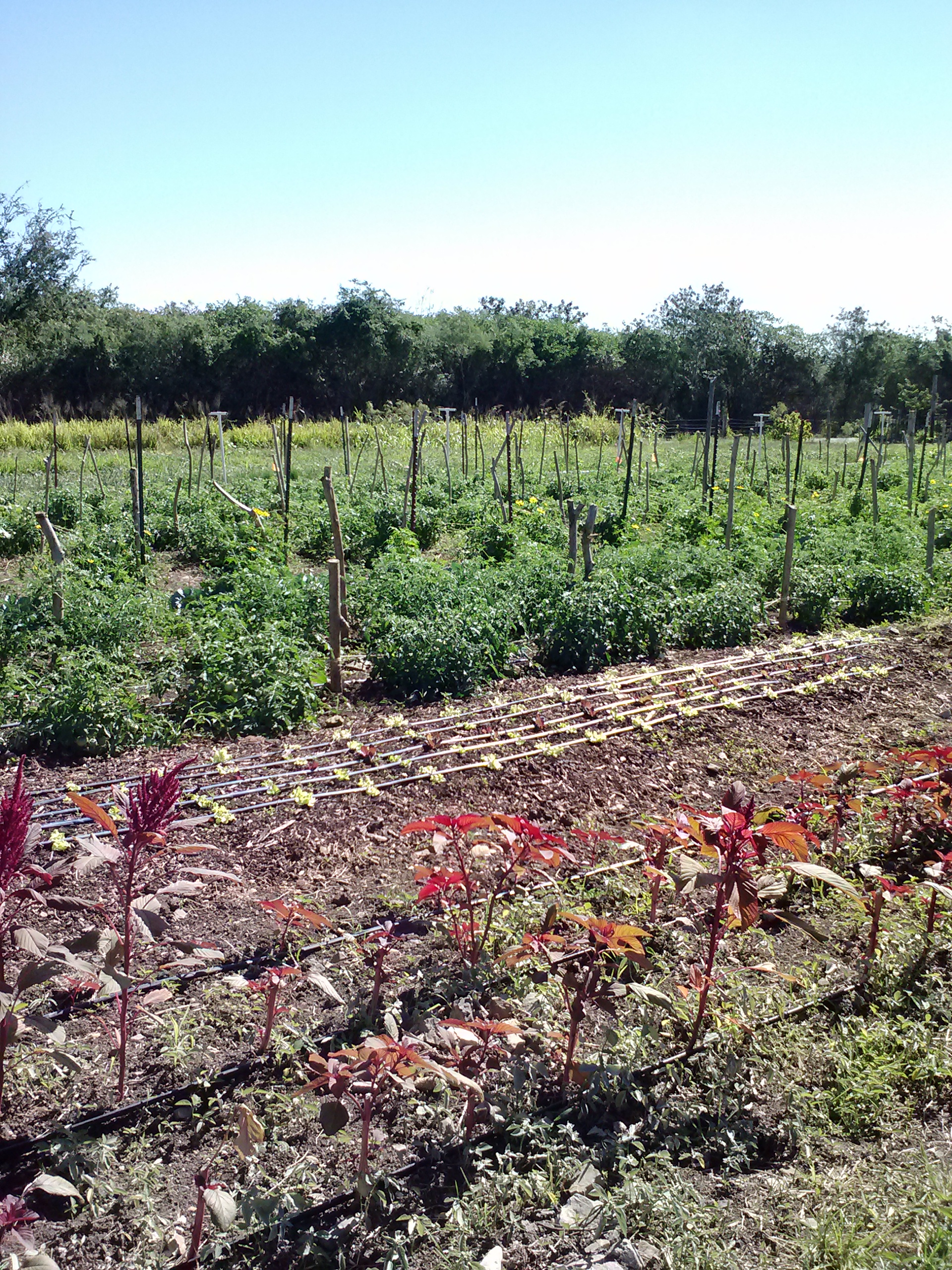
First farm - almost organic. Intercropping is key to keeping herbicide and pesticide expenses as low as possible.

First farm – almost organic. Intercropping is key to keeping herbicide and pesticide expenses as low as possible.

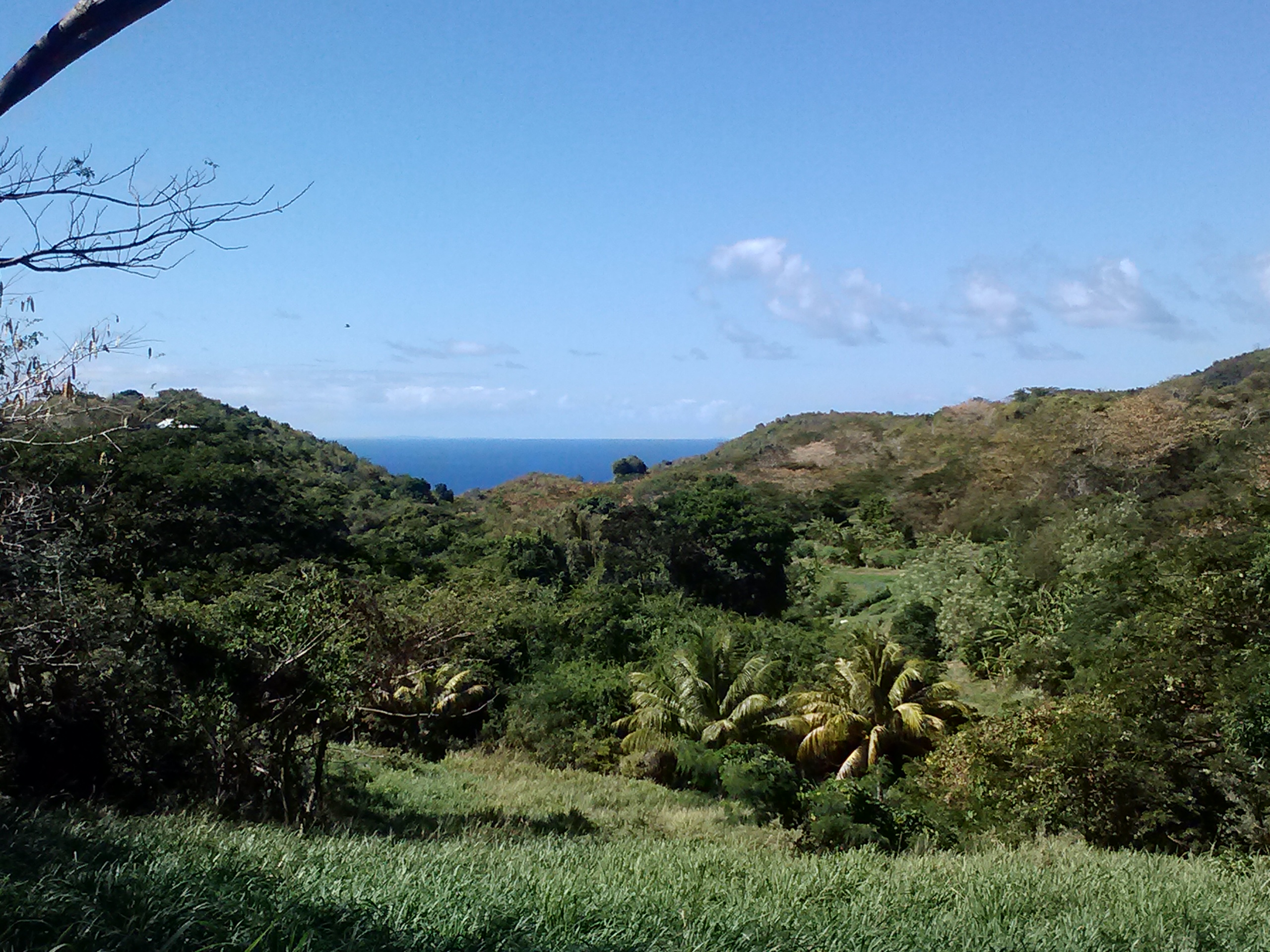
Fourth farm we visited way up in the middle of the mountains in the tropical forest. Beautiful, but really hard to get to.

All the growers were really interested in participating in my study, and were actually very happy that we were including the USVI in the study. It’s sad because the people I spoke to felt like the island was very under-represented, and that the Puerto Ricans get all the attention. But then, the Puerto Ricans feel the same about mainland US. So, I’m glad I’m able to represent both islands in a way that makes them happy.

Although I would love to keep island hopping every trip, it’s just too expensive and my grant money would disappear in a flash. So, I’m going to see if the Entomology extension worker is willing to take on the sampling in St-Croix, and send me the specimens as it goes. I will have one more island hopping trip in March, though, where I’ll train him, if he accepts the position. So no more 8-passenger planes for me!

Flying over St-Thomas

Flying over St-Thomas aboard boring American Eagle

Posted in New Life Experiences | Tagged , , | Leave a comment